
Table of Contents
A foreign work visa, a student admission, permanent residency — all of them can stall on one piece of paper proving you have no criminal record. In Nepal, that paper is the Police Clearance Certificate.
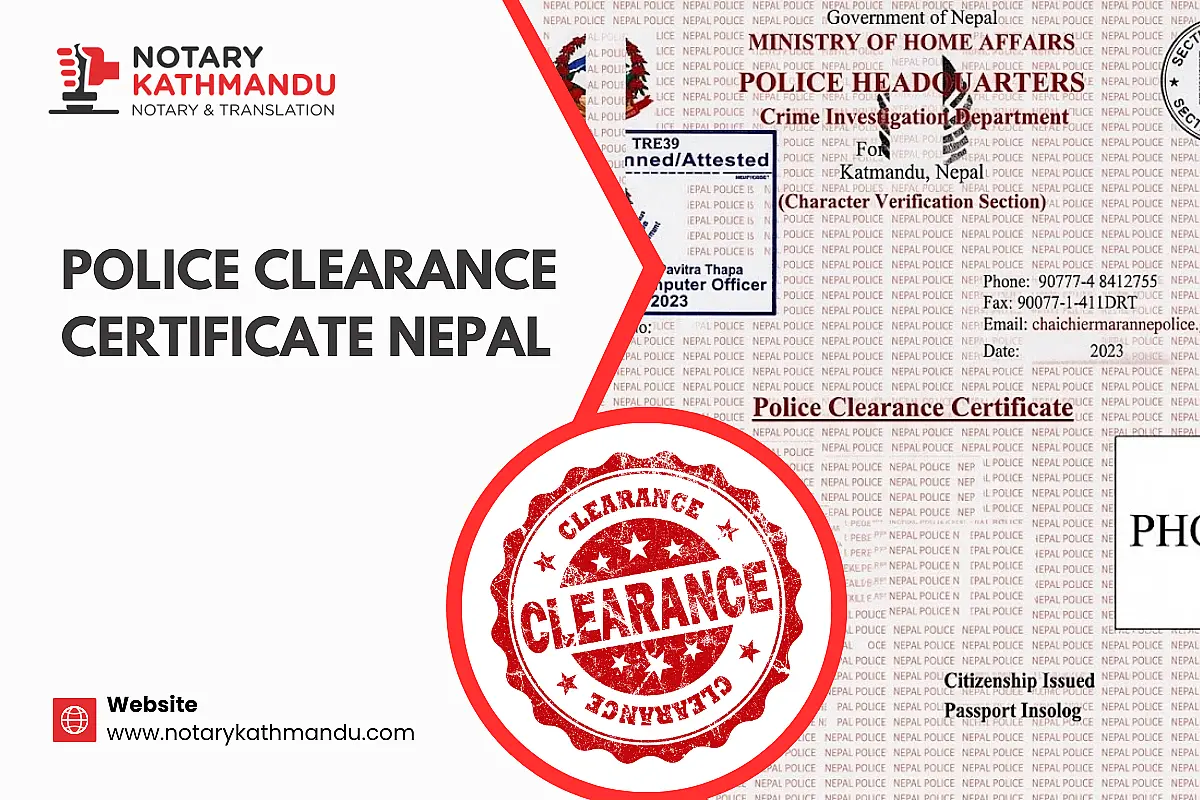
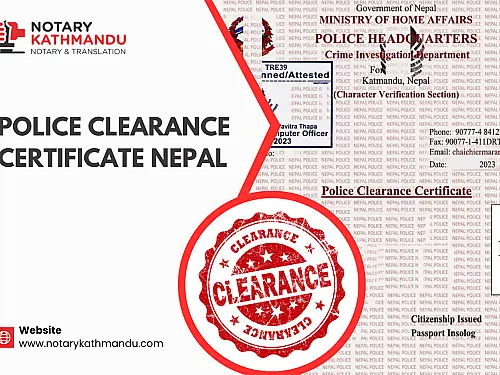
A Police Clearance Certificate (PCC) is issued by Nepal Police and confirms whether you have a criminal record. It is now applied for online, free of charge, and is one of the most common documents Nepalis need when heading abroad.
This guide explains the Police Clearance Certificate in Nepal in 2026 — what it is, how to apply online, the documents you need, how long it stays valid, and the extra steps a PCC needs before it is accepted overseas.
A Police Clearance Certificate (PCC) in Nepal is an official document from Nepal Police certifying whether a person has a criminal record. It is applied for free online at the Online Police Clearance Registration System (opcr.nepalpolice.gov.np), using a citizenship certificate and — for international use — the passport. Processing usually takes a few working days, and a PCC is generally valid for three to six months. For use abroad, the PCC is typically notarised and then attested by the relevant authorities — steps you arrange separately.
Notary Kathmandu provides document notarization, certified true copies, and multilingual translation for individuals and businesses across Nepal.
We do not issue the PCC — Nepal Police does — but we notarise and translate it for foreign use through our notary services in Kathmandu. Get your documents notarized in Kathmandu →
What Is a Police Clearance Certificate in Nepal?
A Police Clearance Certificate — also called a police report, police character certificate, or criminal record check — is an official statement from Nepal Police about whether you have a recorded criminal history. A clean PCC is proof of good standing.
It is requested in a predictable set of situations: foreign employment, work and skilled-migration visas, university admissions abroad, permanent residency and citizenship applications, and sometimes adoption or certain jobs. For most applicants, it is a routine but essential step in going abroad.
Key takeaway: A PCC is Nepal Police's certificate of your criminal-record status — a routine requirement for foreign employment, study, and residency applications.
How to Apply for a PCC Online in Nepal
Nepal Police runs an online system, and applying is free. The certificate is issued by Nepal Police — no agent is required.
Step 1: Register on the Online Portal
Create an account on the Online Police Clearance Registration System (opcr.nepalpolice.gov.np).
Step 2: Complete Identity Verification
Verify your identity as prompted — this may include a live selfie and uploading a clear scan of your citizenship certificate.
Step 3: Enter the Purpose and Details
State the purpose of your PCC (for example, foreign employment or study) and complete the application details, uploading your passport bio page if the certificate is for international use.
Step 4: Submit and Download
Submit the application. Processing typically takes a few working days — sometimes longer during peak visa seasons — after which the certificate can be downloaded.
Key takeaway: Apply free at opcr.nepalpolice.gov.np with your citizenship and passport, state the purpose, and download the certificate after a few working days — no agent needed.
Documents Required for a PCC
The exact list depends on whether the PCC is for domestic or international use:
- Citizenship certificate — clear scan of both sides
- Passport bio page — mandatory for international use
- Recent passport-size photograph
- Purpose letter, or a letter from the employer, university, or embassy where applicable
- For foreign nationals in Nepal: passport, Nepal visa with entry/exit stamps, and proof of residence
Key takeaway: Nepali citizens need citizenship and (for abroad) the passport; foreign nationals in Nepal add their visa and proof of residence.
Processing Time and Validity
Online processing usually takes a few working days, though academic and work-visa seasons can stretch it longer. Plan ahead if you have a submission deadline.
A PCC is generally valid for three to six months from issue. The precise window depends on the authority requesting it — some embassies accept a six-month-old certificate, others insist on one issued within the last three months. Always check the receiving authority's rule before you apply, so your certificate is still current when you submit it.
Key takeaway: A PCC is usually valid three to six months — confirm the receiving authority's exact requirement so it does not expire before you submit.
Using a Nepal PCC Abroad
This is where most people underestimate the work. A PCC issued in Nepal is rarely accepted abroad as-is — it usually needs further steps before a foreign authority will rely on it.
Typically the certificate is notarised, and where the document is in Nepali it needs a certified translation. Beyond that, many countries require onward government attestation — by the Ministry of Foreign Affairs, and then the destination's embassy. Those onward attestation steps are separate processes you arrange directly with the relevant authority; they are not part of notarisation.
Where we help is the document layer: notarising the PCC and providing a certified, verified translation so it is ready for whatever your destination requires. A certified true copy of the PCC is also commonly requested.
Key takeaway: For foreign use, a PCC is notarised and translated in Nepal; any onward Ministry or embassy attestation is a separate step you arrange directly with that authority.
Common Mistakes to Avoid
The errors that delay a PCC are nearly always avoidable:
- Applying too early or too late — getting a PCC that expires before submission, or leaving it until the visa deadline.
- Blurred uploads — unclear citizenship or passport scans that bounce the application.
- Forgetting the passport page — omitting the passport bio page when the PCC is for international use.
- Assuming notarisation is enough — overlooking the onward attestation a destination may require.
- No translation — submitting a Nepali-language PCC abroad without a certified translation.
Key takeaway: Time it to your deadline, upload clear documents, include the passport page, translate it, and check whether your destination needs attestation beyond notarisation.
Conclusion: A Routine Document, Done on Time
A Police Clearance Certificate is straightforward once you know the route: apply free on Nepal Police's online system, submit clean documents, and download the certificate within a few days. The friction is almost always in what comes after — getting it notarised, translated, and ready for a foreign authority that wants more than the plain certificate.
We do not issue the PCC; Nepal Police does, free of charge. What we do is the document layer that makes it usable abroad — notarisation and certified translation — while any onward attestation is a separate step you arrange directly.
If you need your PCC notarised and translated for use overseas, see our notarization services or talk to our team in Kathmandu. Get your documents notarized in Kathmandu →
Reviewed by: The Legal Team at Notary Kathmandu — Nepal Bar Council registered advocates
Last reviewed: April 2026
This article is for informational purposes only and does not constitute legal advice, advertisement, or solicitation. Notary Kathmandu and its team are not liable for any consequences arising from reliance on this information. For legal advice, please contact us directly.
Frequently Asked Questions
A Police Clearance Certificate is an official Nepal Police document certifying whether a person has a criminal record.
Apply free online at the Online Police Clearance Registration System (opcr.nepalpolice.gov.np) using your citizenship certificate and passport, then download the certificate.
A PCC is generally valid for three to six months from issue, depending on the requirements of the authority requesting it.
Online processing through the Nepal Police portal usually takes a few working days. During peak academic and work-visa seasons it can take longer, so apply ahead of any submission deadline. The certificate is then available to download from the portal.
Nepali citizens need a clear scan of both sides of the citizenship certificate, the passport bio page for international use, a photograph, and a purpose or sponsor letter where applicable. Foreign nationals in Nepal add their passport, Nepal visa with entry and exit stamps, and proof of residence.
Yes. Applying through Nepal Police's Online Police Clearance Registration System is free, and the certificate is issued by Nepal Police directly. You do not need an agent to obtain a PCC, though you may choose to use document services for notarisation or translation afterwards.
The application is made through Nepal Police's online system, which can be accessed online, and applicants abroad often coordinate with someone in Nepal or the relevant mission for any in-person or document steps. Check the portal's current requirements, as identity verification may apply.
Usually yes. For foreign use, a PCC is typically notarised and, where it is in Nepali, accompanied by a certified translation. Many countries then require onward attestation by the Ministry of Foreign Affairs and the destination's embassy — separate steps you arrange directly with those authorities.
The Police Clearance Certificate is issued by Nepal Police through its Online Police Clearance Registration System. A notary does not issue the PCC; a notary can only notarise and help translate the certificate once Nepal Police has issued it.
Yes. A foreign national who has stayed in Nepal can obtain a PCC by providing their passport, Nepal visa showing entry and exit stamps, proof of residence, and a purpose letter. This is common for people who lived or worked in Nepal and now need a clearance for another country.
A PCC is used for foreign employment, work and skilled-migration visas, university admissions abroad, permanent residency and citizenship applications, and sometimes adoption or specific jobs. It serves as proof that you have no recorded criminal history in Nepal.
If the receiving authority abroad does not work in Nepali, you will usually need a certified translation of the PCC into the required language, attached to the original. A certified translation alongside notarisation is the common way a PCC is prepared for overseas use.
Notarisation is a licensed notary certifying the document in Nepal. Attestation is a government authority authenticating it for foreign use through an official chain, such as the Ministry of Foreign Affairs and an embassy. Notarisation is done by a notary; attestation is a separate step you arrange with the relevant authority.
Yes. A notary can issue a certified true copy of your Police Clearance Certificate, which is useful when more than one authority needs proof and you want to keep the original. The notary compares the copy against the original before certifying it.
No. The Police Clearance Certificate is issued only by Nepal Police. Notary Kathmandu helps with the document layer afterwards — notarising the certificate and providing a certified translation so it is ready for use abroad.





Your Trusted Legal & Notary Partner in Nepal Notary Kathmandu is a premier provider of notary services, legal documentation, and multilingual translation solutions, now proudly managed by Alpine Law Associates. Our mission...
Read More about us